
Start here
If the taste changed immediately after descaling, pause drink preparation and verify the product, concentration and completed rinse sequence. Do not taste rinse water to decide whether it is safe, and do not hide an unexplained chemical taste with stronger coffee.
Which observation matches?
Choose the closest observation. The complete decision list remains below.
The rinse stage was interrupted or skipped
Complete the documented rinse before making a drink; do not treat an extinguished light as a residue test.
The concentration or product is uncertain
Stop and contact manufacturer/product support. Do not add a second chemical to neutralize the first.
The water filter was left in during a procedure requiring removal
Check the manufacturer's instructions for that exact filter and process before reusing it.
The correct complete process is documented but taste remains abnormal
Stop serving drinks and get model-specific advice. Do not diagnose safety by repeated tasting.
Safe checks, in order
- Write down the product name, amount used, water volume and which outlets/cycles were rinsed.
- Compare the completed steps with the exact manual, including pauses that require user input.
- Follow only the approved corrective rinse or support instruction. Keep waste water separate from drinking water.
- If the process cannot be verified or the abnormal taste persists, stop brewing until the manufacturer advises how to proceed.
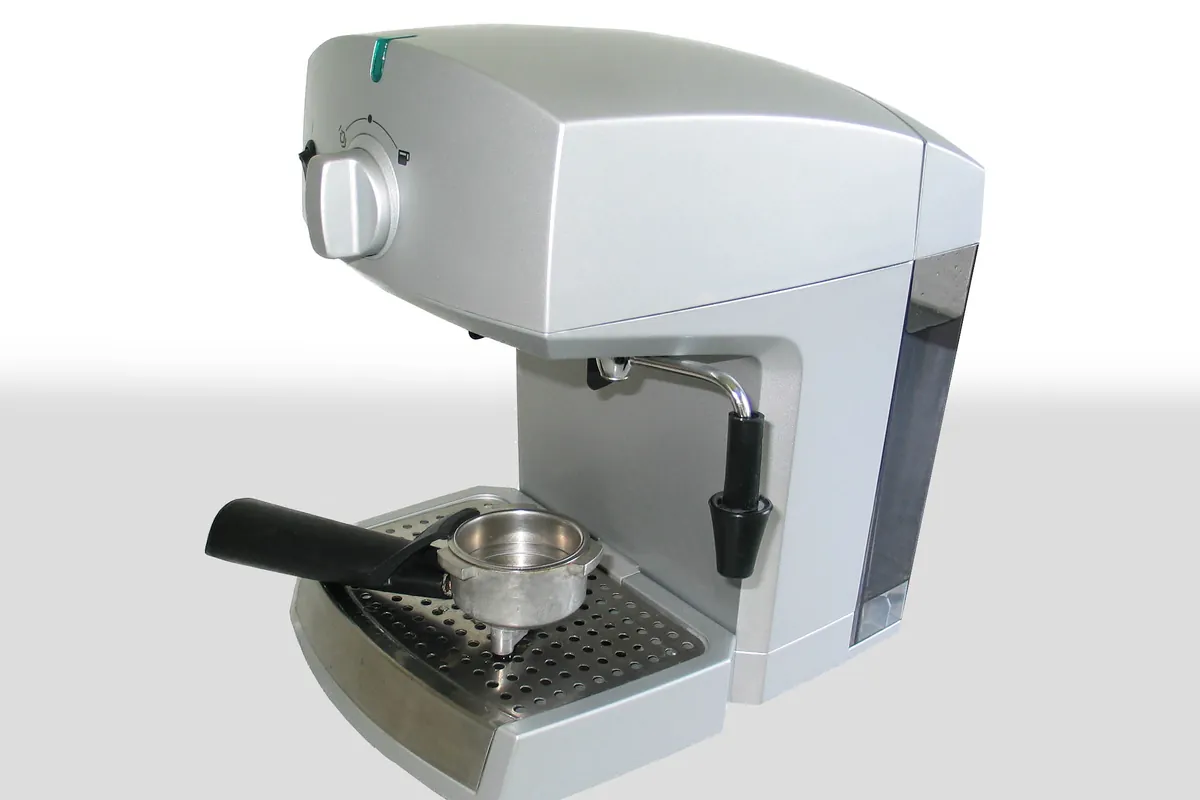
Separate machine, container and ingredients
A carafe or cup washed with detergent can introduce a separate odor or residue. Inspect and rinse removable drinkware according to its instructions, but do not use that possibility to dismiss an incomplete machine rinse. Only return to comparing beans and extraction after the maintenance process is confirmed.
Keep a clear record
A useful note is "descaler used, tank filled to the specified mark, solution phase completed, fresh-water rinse completed, final state shown." A note saying "clean light went off" leaves out the information needed to assess what actually happened. Different machines route rinses differently, so there is no universal number of cups here.
Use the matching manufacturer illustrations
The source links below identify the relevant manual or support page. No verified exact-model hands-on repair video is claimed on this page. Use the written decision list without imitating a different machine.
Open model-specific referencesStop and obtain help when
Stop for unknown chemicals, symptoms after exposure, a failed rinse or persistent chemical odor/taste. For an actual exposure, follow the product label and contact the appropriate poison/emergency service; do not induce vomiting or improvise neutralization.
Questions this diagnosis does not skip
Can I add baking soda to cancel the acid?
No. Do not mix chemicals inside a machine. Use the product and machine instructions.
How many water tanks should I run?
Use the exact supported rinse process; an invented universal tank count is not reliable.
References and evidence
- Breville Bambino Plus BES500 instruction book, Y25US/Canada revision. Printed pages 10-20, especially cleaning versus descaling on 17-18.
- SharkNinja CFP300 series owner guide (manufacturer-authored PDF, mirrored copy)Applies to CFP300, CFP301, CFP305 and CFP355A; features vary. Original manufacturer document, not the mirror site's FAQ. See printed pages 12-23.
- JURA ENA 9 official maintenance and descaling FAQExample only for ENA 9: filter activation and completion of the full maintenance sequence.
Manufacturer facts and procedures are referenced above; the observation comparisons are our diagnostic synthesis, not proof of a failed component. Photos are illustrative, not evidence of hands-on testing. Editorial standards | Report a correction.