
Quick diagnosis
Confirm the portafilter basket, dose, grind, and lock position before blaming the pump. Very coarse or low coffee offers little resistance; no water flow even without coffee points instead to the tank, pump inlet, or blockage.
What this symptom usually means
Low indicated pressure or a fast pale shot is usually an extraction setup problem before it is a pump failure. Dose, grind, puck preparation, basket type, and bean age can all change resistance dramatically.
Model-specific context: Entry-level espresso machines may use pressurized baskets, so generic advice for commercial single-wall baskets may not apply.
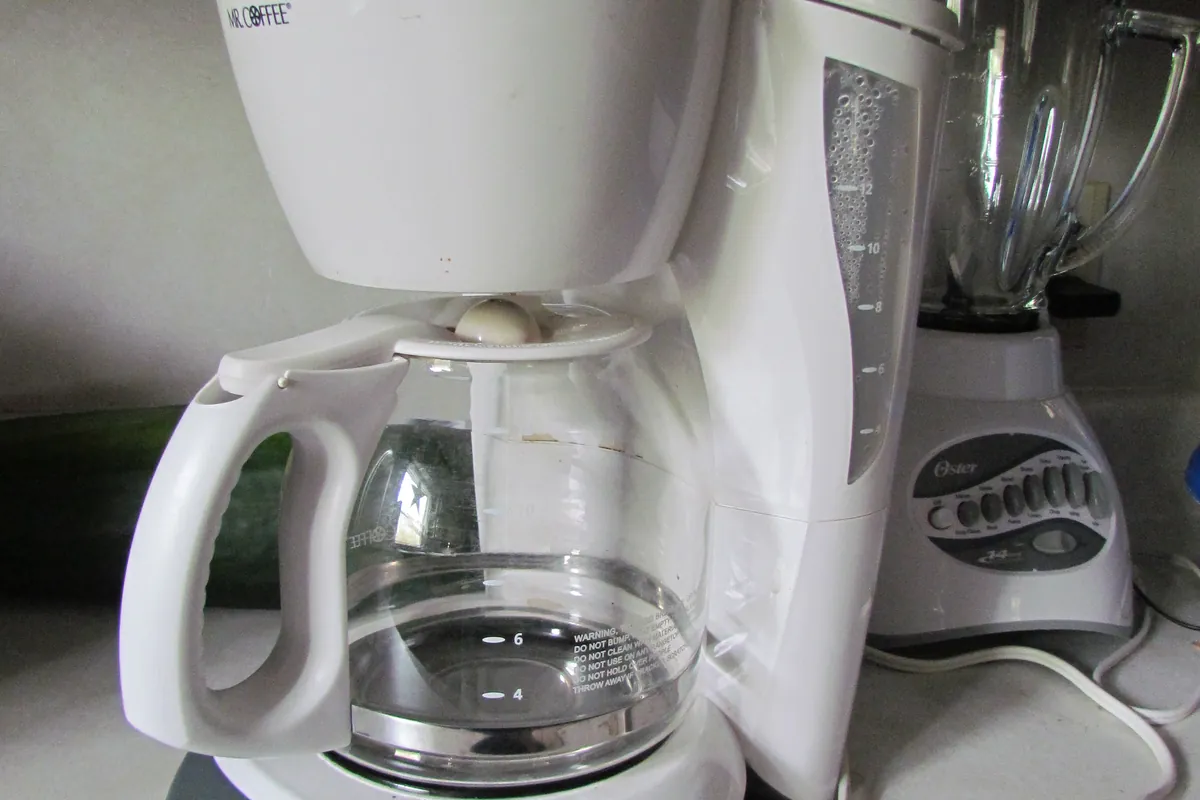
Clues to record before touching the machine
The fastest diagnosis comes from recording the machine's state before it is changed. Use your phone for a short video and write down whether the symptom occurs at startup, while heating, during grinding, after the pump starts, or during shutdown.
- Water flows freely without portafilter
- Shot is pale and fast
- Basket is underfilled
- Warm the machine and run a blank shot
- Weigh the dose rather than relying on the grinder timer
Most likely causes, in diagnostic order
The list below is ordered from common and externally testable conditions toward causes that may need qualified service. It is not a replacement for the error table or safety instructions for your exact model.
- Grind is too coarse
- Dose is too low
- Pressurized basket insert is missing or blocked
- Dose is too low for the basket
- Coffee is stale or puck preparation is uneven
- Water bypasses a damaged seal or blocked pressure system
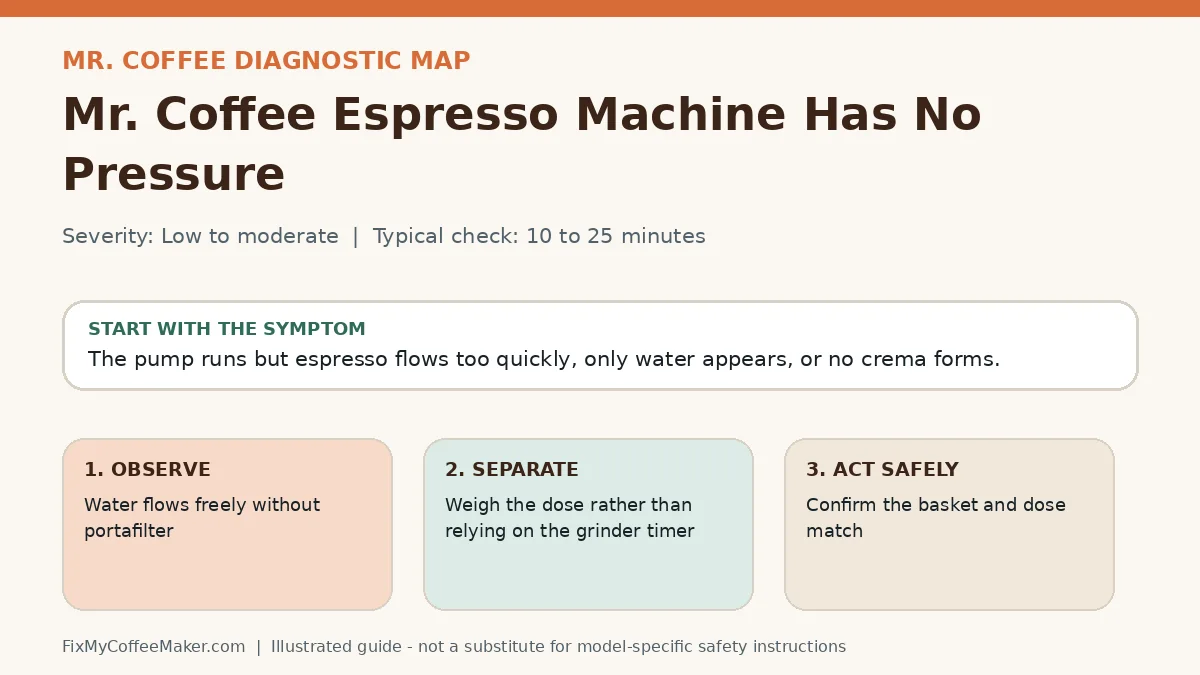
The 60-second separating test
Do not begin by replacing parts or repeating the full maintenance cycle. Complete these checks in order and stop if the machine behaves abnormally.
- Warm the machine and run a blank shot
- Weigh the dose rather than relying on the grinder timer
- Use the recommended basket and a mid-fine grind
- Time from pump start to the target beverage mass
Illustrated video walkthrough
Original 8-second silent, captioned diagnostic animation. It is an illustrated decision guide, not footage of this exact machine.
Safe fixes, easiest first
- Confirm the basket and dose match
- Adjust one grind step finer while the grinder is running if required by the model
- Distribute and tamp level
- Run a timed shot and record dose, yield, and time
- Clean the group head and basket
- If pressure stays near zero with a proper blind-cleaning test, seek service
How to interpret what happens next
Shot slows after a finer grind: the machine can build resistance
Pressure is normal with a cleaning disc but not coffee: puck variables are the issue
Water bypasses the portafilter edge: inspect the gasket and lock-in
No pressure under controlled resistance: pump or valve service may be needed
Common misdiagnosis
The gauge is not a direct taste meter. A shot can land in a marked zone and still be poorly extracted, so use time, yield, appearance, and taste together.
When to stop troubleshooting
Owner-level checks end when the next step would expose wiring, a heater, pressurized plumbing, sharp internal parts, or a sealed grinder. Stop and contact the manufacturer or a qualified appliance technician when any of these apply:
- Portafilter unlocks or sprays
- Pump sound changes sharply
- Water leaks inside the base
- A blind test is not approved for the model
Prevent the problem from returning
- Record a repeatable recipe
- Keep baskets and group seals clean
- Change only one variable at a time
Sources and verification
This page paraphrases owner-level manufacturer guidance and adds an original symptom-first decision path. It does not reproduce a manual. Exact button sequences should always be checked against the model label and current official instructions.
- Mr. Coffee support - official manufacturer information used to verify model terminology and owner-level procedures.
Editorial status: desk-researched against official support material; diagnostic media are original illustrations. We do not claim hands-on testing of this exact machine. See our evidence labels and report a correction.