Quick diagnosis
Grounds usually escape when a pod seal fails, the exit needle is restricted, or pressure deforms the pod. Inspect the used pod for a torn foil top or sidewall and clean the holder and needles before testing a fresh undamaged pod.
What this symptom usually means
Overflow happens when water enters the basket faster than it can pass through. Excess or overly fine coffee, stacked filters, a blocked outlet, misaligned carafe lid, or a closed drip-stop are the usual causes.
Model-specific context: A small amount of very fine sediment differs from a cup containing visible grounds. Photograph the used pod because its puncture pattern is a strong clue.
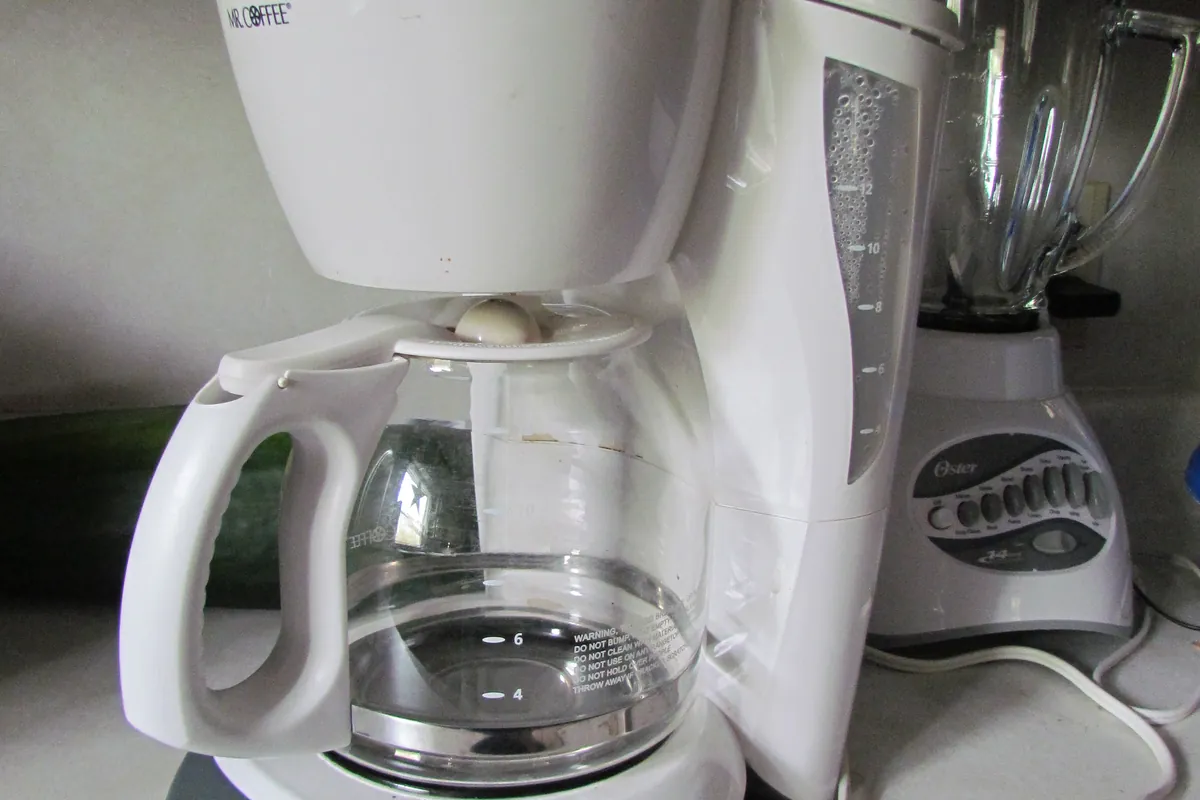
Clues to record before touching the machine
The fastest diagnosis comes from recording the machine's state before it is changed. Use your phone for a short video and write down whether the symptom occurs at startup, while heating, during grinding, after the pump starts, or during shutdown.
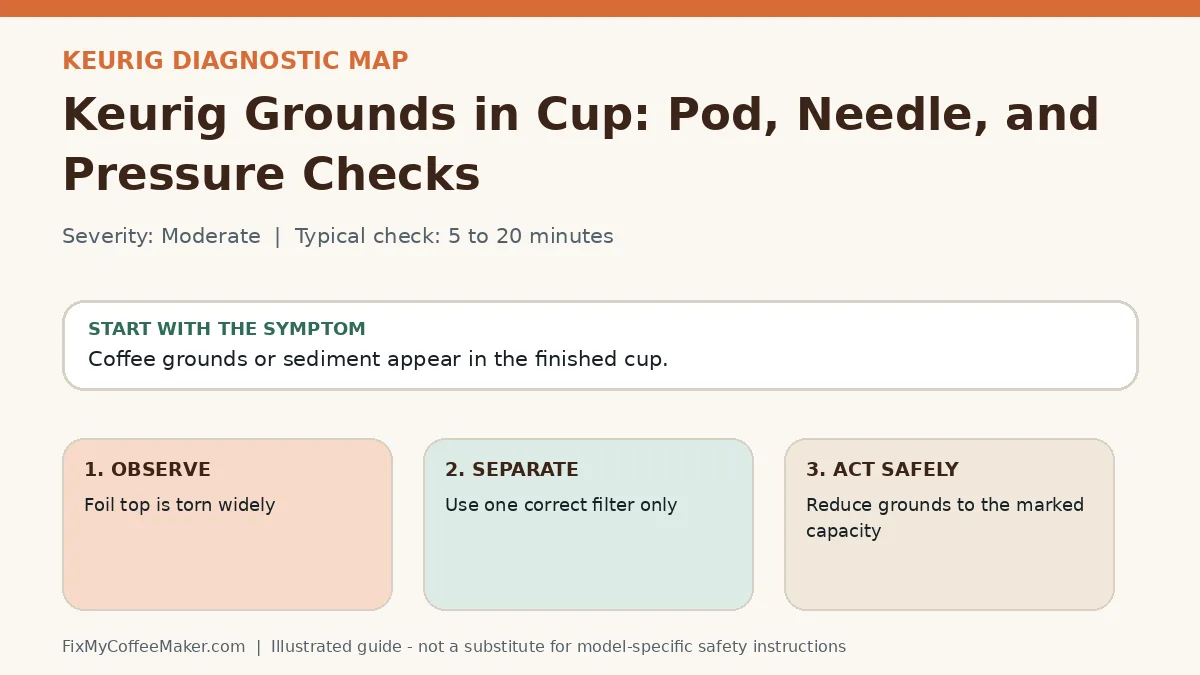
- Foil top is torn widely
- Grounds collect in pod holder
- Problem follows one pod brand or batch
- Unplug and clean the basket outlet
- Use one correct filter only
Most likely causes, in diagnostic order
The list below is ordered from common and externally testable conditions toward causes that may need qualified service. It is not a replacement for the error table or safety instructions for your exact model.
- Exit needle is restricted
- Pod is overfilled or damaged
- Pod holder is not seated
- Coffee is too fine or dose is too large
- Paper and permanent filters are stacked
- Basket outlet or drip-stop is blocked
- Carafe lid is not opening the valve
The 60-second separating test
Do not begin by replacing parts or repeating the full maintenance cycle. Complete these checks in order and stop if the machine behaves abnormally.
- Unplug and clean the basket outlet
- Use one correct filter only
- Run a small water-only cycle
- Confirm the carafe lid sits under the drip-stop
Illustrated video walkthrough
Original 8-second silent, captioned diagnostic animation. It is an illustrated decision guide, not footage of this exact machine.
Safe fixes, easiest first
- Reduce grounds to the marked capacity
- Use a medium drip grind
- Remove duplicate filters
- Clean the basket valve and carafe-lid contact
- Seat the basket and carafe fully
- Test a half batch before returning to full volume
How to interpret what happens next
Water-only cycle drains normally: coffee dose or grind caused the overflow
Water backs up without coffee: basket valve or alignment is involved
Only full batches overflow: flow is marginal or dose is excessive
Valve sticks after cleaning: replace the user-serviceable basket if available
Common misdiagnosis
A stronger brew does not require packing the basket to the rim. Overloading slows drainage and can send grounds into the carafe.
When to stop troubleshooting
Owner-level checks end when the next step would expose wiring, a heater, pressurized plumbing, sharp internal parts, or a sealed grinder. Stop and contact the manufacturer or a qualified appliance technician when any of these apply:
- Hot water reaches controls or cord
- Basket is cracked
- Valve cannot move freely
- Overflow continues with a water-only test
Prevent the problem from returning
- Measure grounds
- Use one filter system
- Rinse the basket valve after each brew
Sources and verification
This page paraphrases owner-level manufacturer guidance and adds an original symptom-first decision path. It does not reproduce a manual. Exact button sequences should always be checked against the model label and current official instructions.
- Keurig support - official manufacturer information used to verify model terminology and owner-level procedures.
Editorial status: desk-researched against official support material; diagnostic media are original illustrations. We do not claim hands-on testing of this exact machine. See our evidence labels and report a correction.