Quick diagnosis
Compare a short black coffee in a preheated cup with the milk drink. If black coffee is hot but the combined drink is cool, milk volume and temperature dominate. If all hot-water functions are cool, review temperature settings, scale, and service needs.
What this symptom usually means
Perceived cold coffee may be caused by a cold cup, short beverage volume, milk, low temperature setting, scale, or a heater fault. Compare a water-only output in a preheated cup before judging by a milk drink.
Model-specific context: Hot and cold recipe modes can be selected from the same machine. Confirm the drink program before diagnosing the heater.
Clues to record before touching the machine
The fastest diagnosis comes from recording the machine's state before it is changed. Use your phone for a short video and write down whether the symptom occurs at startup, while heating, during grinding, after the pump starts, or during shutdown.
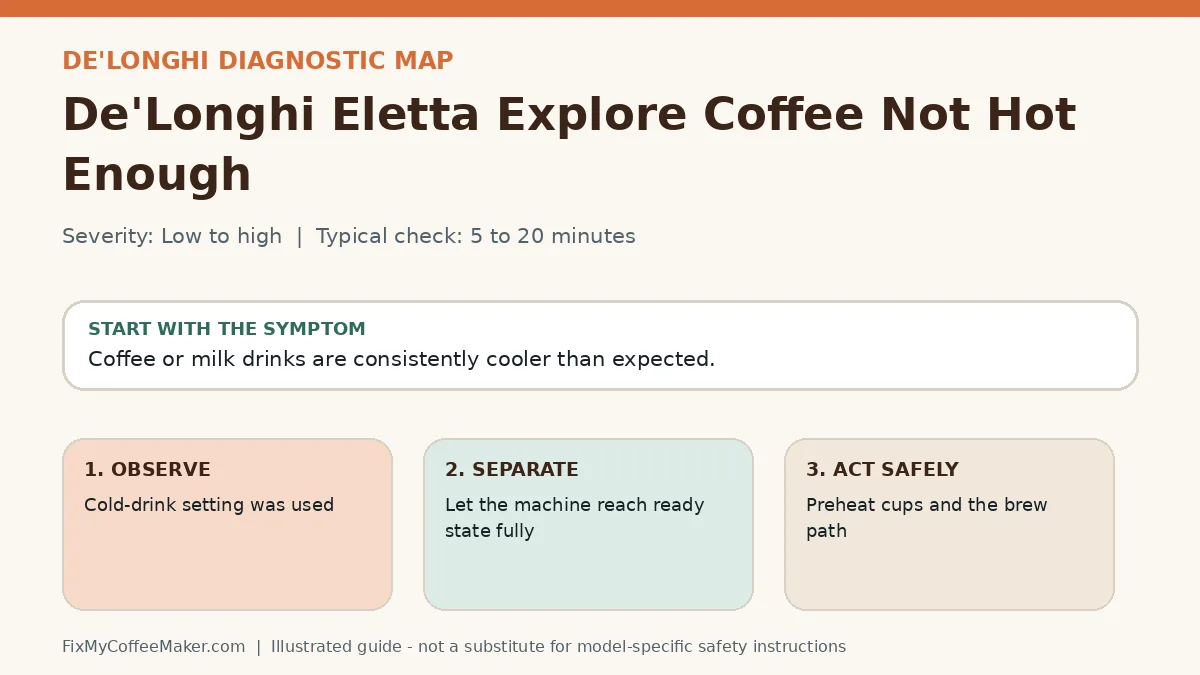
- Cold-drink setting was used
- Black coffee is hotter than latte
- First drink after startup is coolest
- Preheat the cup with hot water
- Let the machine reach ready state fully
Most likely causes, in diagnostic order
The list below is ordered from common and externally testable conditions toward causes that may need qualified service. It is not a replacement for the error table or safety instructions for your exact model.
- Cup and milk absorb heat
- Temperature profile is set low
- Scale affects heating
- Cup and brew path were cold
- Temperature setting is low
- Scale reduces heat transfer or flow
- Heater or sensor is not reaching target
Owner-level observations and checks
Do not begin by replacing parts or repeating the full maintenance cycle. Complete these checks in order and stop if the machine behaves abnormally.
- Preheat the cup with hot water
- Let the machine reach ready state fully
- Run a water-only cycle and compare temperature
- Check whether steam or hot-water performance is also weak
Illustrated video walkthrough
Original 8-second silent, captioned diagnostic animation. It is an illustrated decision guide, not footage of this exact machine.
Safe fixes, easiest first
- Preheat cups and the brew path
- Select a higher approved temperature setting
- Reduce long delays between rinse and brew
- Descale on schedule
- Test without cold milk
- Seek service if all hot-water functions stay lukewarm
How to interpret what happens next
Hot water is normal but milk drink is cool: milk ratio or cup temperature dominates
All outputs are cool: heater, sensor, or heavy scale is possible
First cup is cool but second is hot: warm-up routine needs adjustment
Temperature fluctuates widely: service may be needed
Common misdiagnosis
Measuring in a cold ceramic mug can make a normal output look faulty. Warm the vessel and measure promptly.
When to stop troubleshooting
Owner-level checks end when the next step would expose wiring, a heater, pressurized plumbing, sharp internal parts, or a sealed grinder. Stop and contact the manufacturer or a qualified appliance technician when any of these apply:
- Machine overheats or produces excessive steam
- Heating never stops
- Burning odor appears
- Outlet trips
Prevent the problem from returning
- Preheat cups
- Keep temperature settings documented
- Maintain descaling intervals
Sources and verification
This page paraphrases owner-level manufacturer guidance and adds an original symptom-first decision path. It does not reproduce a manual. Exact button sequences should always be checked against the model label and current official instructions.
- De'Longhi support center - official manufacturer information used to verify model terminology and owner-level procedures.
Editorial status: desk-researched against official support material; diagnostic media are original illustrations. We do not claim hands-on testing of this exact machine. See our evidence labels and report a correction.