
Quick diagnosis
Unplug, remove beans, and clean the user-removable hopper, burr or blade area, chute, and grinder basket. Silence can come from a lid interlock; motor sound with no grounds commonly means a blocked chute or damp coffee residue.
What this symptom usually means
A grinder that hums, spins without feeding, or stays silent points to different causes. Oily beans and compacted fines often prevent feeding, while a hard foreign object can jam the burrs. A silent grinder may be waiting for a lid or hopper interlock.
Model-specific context: Grind & Brew models use different blade or burr assemblies. Remove only parts shown in the specific manual and keep them fully dry before reassembly.
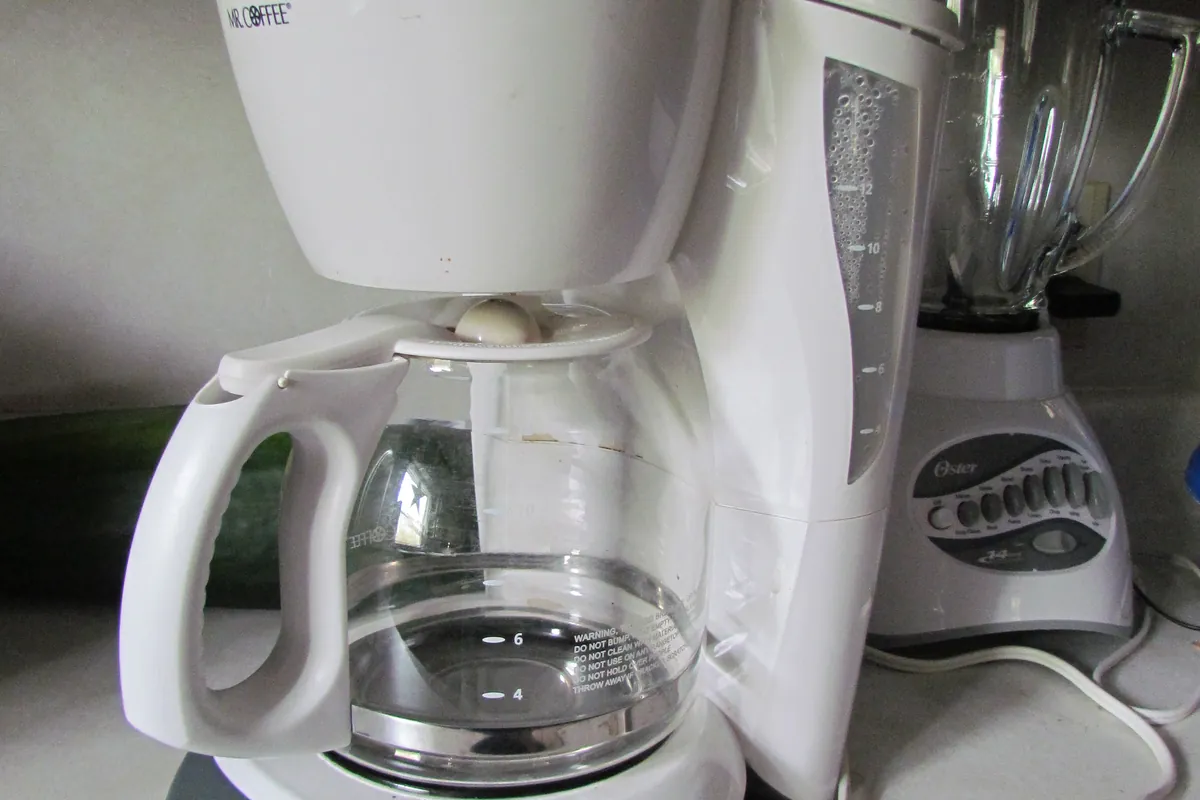
Clues to record before touching the machine
The fastest diagnosis comes from recording the machine's state before it is changed. Use your phone for a short video and write down whether the symptom occurs at startup, while heating, during grinding, after the pump starts, or during shutdown.
- Grinder lid was recently removed
- Damp grounds pack the chute
- Motor hums without output
- Unplug before touching the hopper or burr area
- Remove beans and inspect for a bridge or foreign object
Most likely causes, in diagnostic order
The list below is ordered from common and externally testable conditions toward causes that may need qualified service. It is not a replacement for the error table or safety instructions for your exact model.
- Lid interlock is not engaged
- Chute is compacted
- Blade or burr is jammed
- Beans bridge above the burrs
- Oily residue and fines compact in the chute
- Hopper or lid interlock is not detected
- A hard object is lodged in the burrs
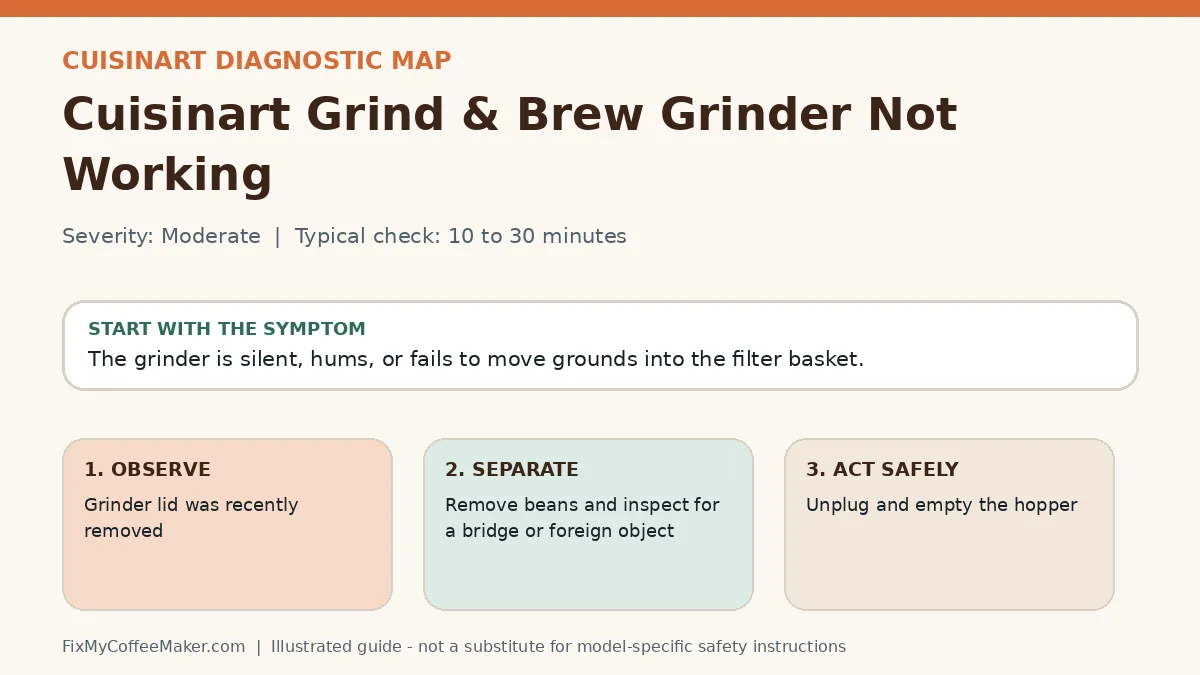
The 60-second separating test
Do not begin by replacing parts or repeating the full maintenance cycle. Complete these checks in order and stop if the machine behaves abnormally.
- Unplug before touching the hopper or burr area
- Remove beans and inspect for a bridge or foreign object
- Reseat the hopper at its lock mark
- Test a brief grind with a small amount of dry medium-roast beans
Illustrated video walkthrough
Original 8-second silent, captioned diagnostic animation. It is an illustrated decision guide, not footage of this exact machine.
Safe fixes, easiest first
- Unplug and empty the hopper
- Remove only parts the manual identifies as user-removable
- Brush dry grounds from the burr and chute; do not add water
- Check the hopper tabs and lid position
- Reassemble at a mid-range grind setting
- Test briefly and stop if the motor stalls
How to interpret what happens next
Motor runs but no grounds exit: chute or feed path remains blocked
Motor hums and stops: burr jam or overload is likely
No sound until hopper is reseated: an interlock caused the symptom
Grinding is uneven after cleaning: burr wear or calibration may need service
Common misdiagnosis
Turning the adjustment far finer while the grinder is stopped can wedge beans between burrs on some machines. Follow the model instructions for changing grind size.
When to stop troubleshooting
Owner-level checks end when the next step would expose wiring, a heater, pressurized plumbing, sharp internal parts, or a sealed grinder. Stop and contact the manufacturer or a qualified appliance technician when any of these apply:
- Motor smells hot
- A hard object cannot be removed safely
- Burrs are damaged
- The grinder repeatedly stalls after cleaning
Prevent the problem from returning
- Use dry beans without visible surface oil when possible
- Do not store beans long-term in a warm hopper
- Brush the chute before buildup becomes compacted
Sources and verification
This page paraphrases owner-level manufacturer guidance and adds an original symptom-first decision path. It does not reproduce a manual. Exact button sequences should always be checked against the model label and current official instructions.
- Cuisinart manuals and product support - official manufacturer information used to verify model terminology and owner-level procedures.
Editorial status: desk-researched against official support material; diagnostic media are original illustrations. We do not claim hands-on testing of this exact machine. See our evidence labels and report a correction.