
Quick diagnosis
Purge the wand and judge steam strength before changing technique. Strong dry steam with flat milk points to air-entry position or milk temperature; weak steam through every test points to a blocked tip, scale, or heating problem.
What this symptom usually means
Separate a steam-supply problem from a milk-technique problem. Test the wand or milk outlet with water first. Strong steam with poor foam points to milk temperature, air intake, or technique; weak or no steam points to a blockage, assembly issue, or heat fault.
Model-specific context: The machine needs time to transition from brewing to steam. Wait for the steam-ready indication and purge condensation before placing the tip in milk.
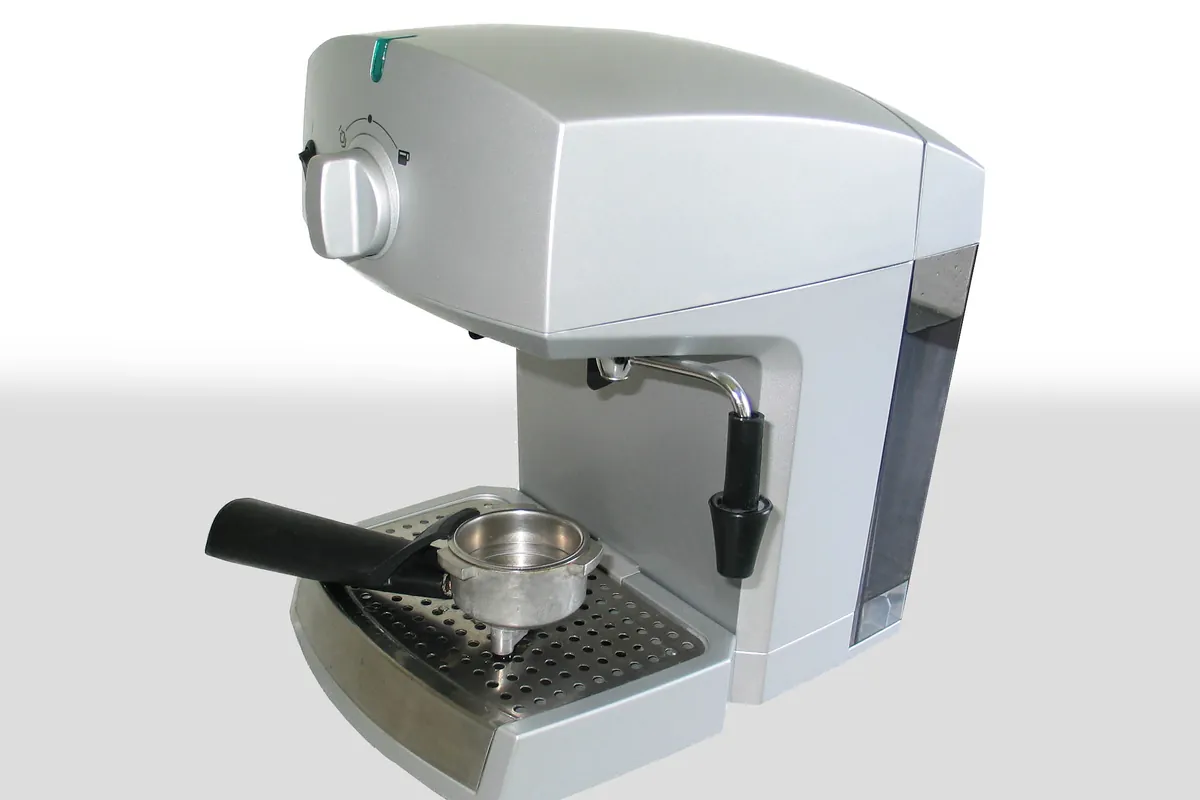
Clues to record before touching the machine
The fastest diagnosis comes from recording the machine's state before it is changed. Use your phone for a short video and write down whether the symptom occurs at startup, while heating, during grinding, after the pump starts, or during shutdown.
- One or more tip holes look blocked
- Milk becomes hot without rolling
- Steam improves after purging water
- Purge briefly into the tray and observe steam strength
- Remove and rinse user-removable milk parts
Most likely causes, in diagnostic order
The list below is ordered from common and externally testable conditions toward causes that may need qualified service. It is not a replacement for the error table or safety instructions for your exact model.
- Dried milk blocks the tip
- The tip is submerged too deeply to introduce air
- Dried milk blocks the tip or air intake
- Milk system parts are assembled incorrectly
- The machine has not reached steam temperature
- Milk is too warm or unsuitable for the selected program
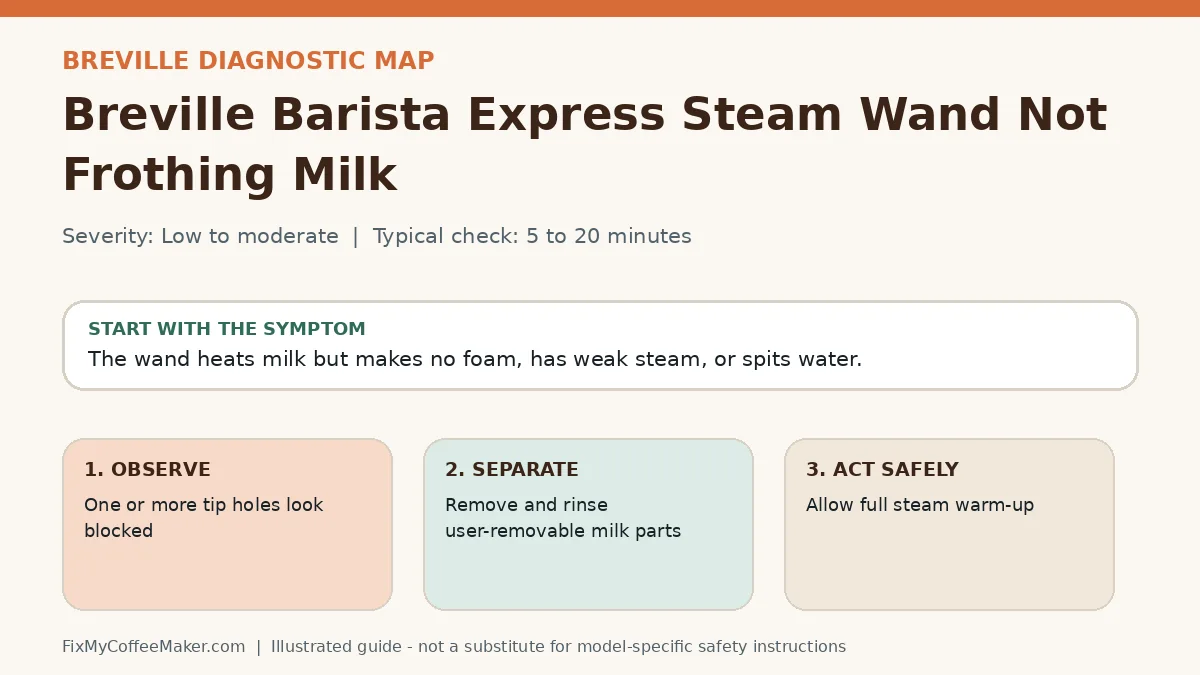
The 60-second separating test
Do not begin by replacing parts or repeating the full maintenance cycle. Complete these checks in order and stop if the machine behaves abnormally.
- Purge briefly into the tray and observe steam strength
- Remove and rinse user-removable milk parts
- Test with cold water to see whether the system draws liquid
- Use cold milk and the manufacturer-recommended fill level
Illustrated video walkthrough
Original 8-second silent, captioned diagnostic animation. It is an illustrated decision guide, not footage of this exact machine.
Safe fixes, easiest first
- Allow full steam warm-up
- Wipe and purge the wand immediately before and after use
- Clear only the removable tip holes with the supplied tool
- Reassemble tubes, lids, and air regulators exactly
- Test with cold fresh milk
- Descale if both steam and hot-water performance have weakened
How to interpret what happens next
Strong steam but large bubbles: adjust air introduction and position
Water draws but milk does not: residue or milk-system assembly is likely
No steam and no hot water: heating or scale issue may require service
Steam fades quickly: allow recovery and check maintenance status
Common misdiagnosis
A clogged air inlet can produce hot flat milk even when steam is present. Cleaning only the visible milk nozzle may not reach that inlet.
When to stop troubleshooting
Owner-level checks end when the next step would expose wiring, a heater, pressurized plumbing, sharp internal parts, or a sealed grinder. Stop and contact the manufacturer or a qualified appliance technician when any of these apply:
- Steam escapes from a joint or inside the housing
- The wand is loose or damaged
- There is a burning smell
- A hot-water fault persists after approved cleaning
Prevent the problem from returning
- Purge and wipe after every drink
- Refrigerate milk-system parts when directed
- Deep-clean milk paths daily when used
Sources and verification
This page paraphrases owner-level manufacturer guidance and adds an original symptom-first decision path. It does not reproduce a manual. Exact button sequences should always be checked against the model label and current official instructions.
- Breville Barista Express support - official manufacturer information used to verify model terminology and owner-level procedures.
Editorial status: desk-researched against official support material; diagnostic media are original illustrations. We do not claim hands-on testing of this exact machine. See our evidence labels and report a correction.